California's Four Legal Ways to Homeschool, Compared: Affidavit, PSP, Credentialed Tutor or Charter
By My Learning Source · October 19, 2026 · Guides, Scholarships
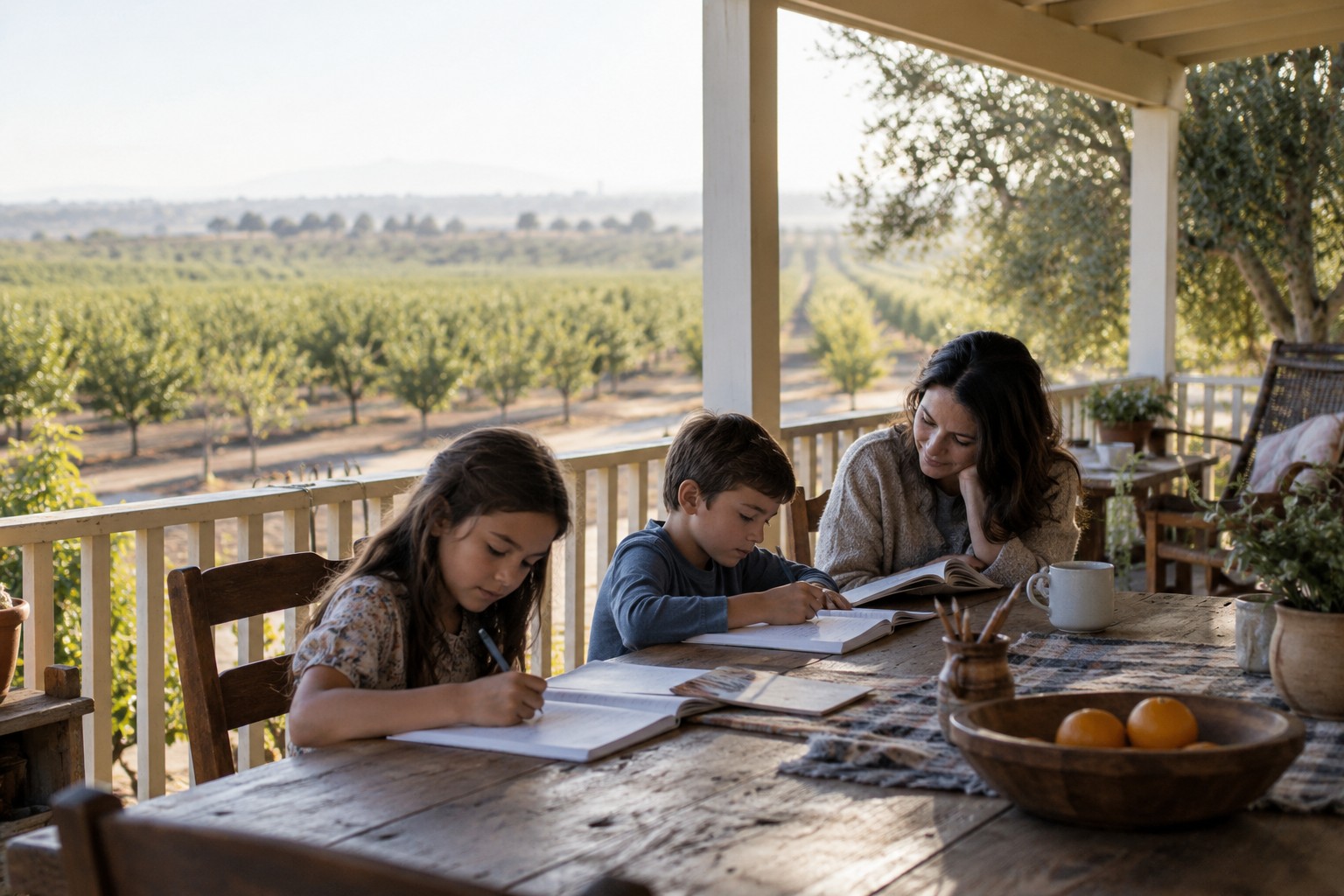
California has no education savings account, no voucher and no tax-credit scholarship. A family that wants to teach a child at home does not apply to a program. It picks a legal route. There are four that families actually use, and they are not interchangeable. Three are private and come with no public money. One is public school at home and comes with a supervising teacher, state testing and, at many charter schools, a materials budget the school controls.

This piece lines the four up side by side so you can see which one fits before you sign anything. Our California homeschool options guide keeps the short version on one page.
Why California needs an exemption at all
California's compulsory education law, Education Code 48200, requires children from 6 to 18 to attend public full-time day school unless an exemption applies. Every homeschool route is either an exemption from that rule or a form of public school. The California Department of Education's Schooling at Home page lists the ways families do it: a public charter school, a public school independent study program, an existing private school that offers independent study, a home-based private school, or a credentialed tutor.
Route 1: the home-based private school
This is what most people mean by homeschooling in California. The parent files the Private School Affidavit with CDE every year under Education Code 33190 and runs the home as a small private school. Under Education Code 48222, the exemption from public school is valid once the district's attendance supervisor verifies the affidavit was filed.
- Curriculum: you choose it. Instruction must be in English and cover the branches of study taught in public schools, listed in EC 51210 for grades 1 to 6 and EC 51220 for grades 7 to 12.
- Money: none from the state. You pay for everything.
- Testing: CDE says state testing is not required of private schools.
- Faith-based curriculum: your decision.
- Paperwork: the annual affidavit, an attendance register, a record of the courses of study, and the teacher's name, address and qualifications.
Route 2: a private school satellite program
A private school satellite program, or PSP, is a private school that enrolls students who learn at home. CDE's Private School Affidavit information page lists private school satellite programs among the schools that must file the affidavit. In the usual setup, the PSP is the school, it files the affidavit and keeps school records, and the parent does the teaching.
- Curriculum: mostly yours, within whatever rules the PSP sets.
- Money: none from the state. PSPs commonly charge fees, which you pay.
- Why families pick it: someone else handles the filing and the school records, and some PSPs add classes, transcripts, counseling or a community.
Route 3: a credentialed tutor
Education Code 48224 exempts a child taught by a person who holds a valid California credential for the grade taught, at least three hours a day for 175 days each calendar year, between 8 a.m. and 4 p.m., in English and in the subjects public schools teach. CDE's affidavit FAQ says that when those conditions are met, no affidavit is needed. In practice this route fits families where a parent holds a credential, or families willing to hire one.
Route 4: charter or district independent study
Here the child enrolls in a public school, a charter school or a school district program, and does most of the work at home. A credentialed teacher employed by the school supervises the work and judges its value for attendance. The student, the parent and the teacher sign a written agreement. The student takes state tests, coursework must be secular, and the school, not the family, controls any money.
That last point matters. Many homeschool-focused charters give each student a yearly instructional or enrichment budget to spend with vendors the charter approves. No state law sets that amount, and it varies from school to school. It is the only one of the four routes with public money attached, and it is the only one where your child is a public school student.
The four routes side by side
- Your child's legal status: private school student with the affidavit or a PSP, an exempt tutored student with a credentialed tutor, a public school student in independent study.
- Who files: the parent, the PSP, nobody, and for independent study the school simply enrolls you.
- Public money: none, none, none, and a school-controlled budget at many charters.
- Religious curriculum: allowed in the three private routes. CDE's independent study FAQ says religious materials can't be assigned or used to complete independent study work.
- State testing: not required in the private routes, required for charter students.
- Where you live: anywhere in California for the private routes. For independent study, a school can only claim state funding for students who live in its county or an adjacent county (EC 51747.3).
A family deciding
The Okafors live outside Fresno with a second grader and a sixth grader. They liked the idea of a charter budget for piano lessons and a science kit subscription. Then they read the charter's family handbook and saw the work-sample schedule, the monthly teacher meetings and the rule against religious materials, which ruled out the Bible-based history program they already owned. They filed the Private School Affidavit instead, kept their curriculum and paid for piano themselves. They plan to look at a charter again when their older child reaches high school lab sciences.
(A composite example — names and details are illustrative, drawn from situations homeschool families commonly describe.)
Switching later
You are not locked in. A family leaving a charter to homeschool privately files the affidavit and gives the district a copy if asked. A family that files the affidavit can enroll in public school at any time, and CDE's Schooling at Home FAQ says filing does not affect that right. Be aware that a public school sets its own policy on placing a returning student and on accepting credits you awarded.
What you can't do is stack public and private. Education Code 47602 says a charter school gets no public funds for a student who also attends a private school that charges tuition. Pick one home base per child per year.
Checklist before you pick
- Decide first whether you want private control or public support. Most other choices follow from that one.
- If faith-based curriculum is central to your school, the three private routes are the realistic options.
- If you are looking at a charter, read its family handbook before enrolling: budget, vendor list, ordering deadlines, meetings and work samples.
- Confirm the charter can enroll students from your county.
- If you go the affidavit route, put the October 1 to 15 filing period on your education calendar.
- Line up curriculum, tutors and classes through our vendor directory, and find local families through the community page.
My Learning Source is an independent marketplace and is not affiliated with the California Department of Education, the California Legislature, any school district, county office of education, charter school or private school satellite program. Laws, school policies and filing systems change — confirm details with the California Department of Education, your school district or your charter school before you act. Family examples are composites, not real individuals.